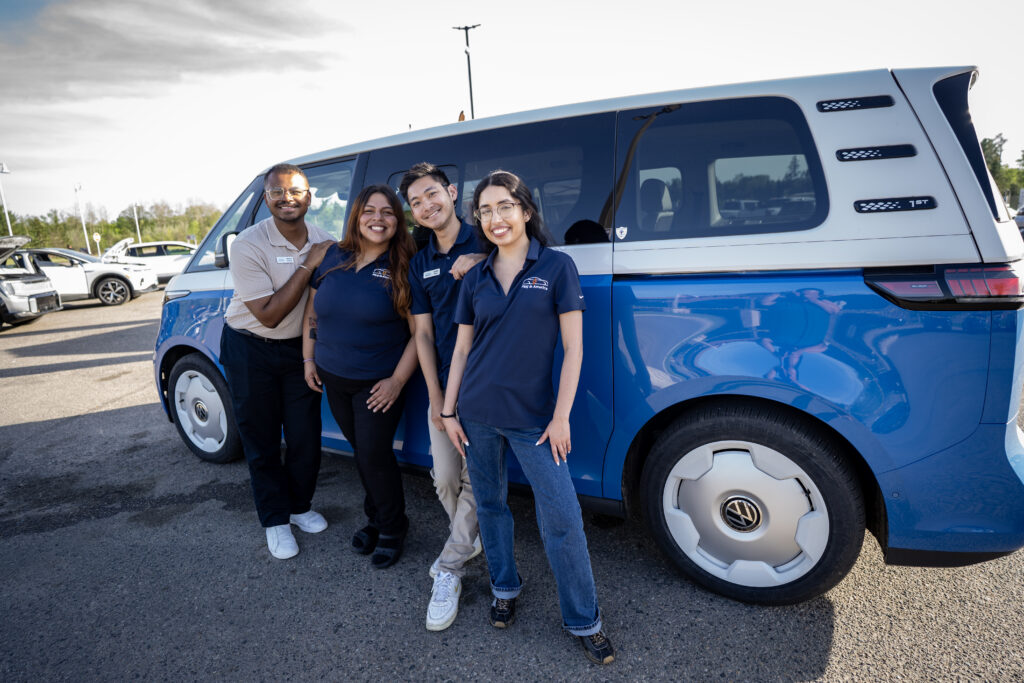
Plug In America staff who traveled to Minnesota for Freedom to Drive. Photo by Nedahness Rose Greene.
Plug In America hosts events every year, but the Freedom to Drive Electric Vehicle and Renewable Energy Showcase was different from the start. Built in close partnership with the Red Lake Nation, Seven Clans Casino, and Native Sun Community Power Development (Native Sun), the event was Plug In America’s first Tribal EV showcase and was shaped entirely by the community it served — from who conducted the surveys to who supplied the food and documented it. I caught up with Jessica, our events coordinator, and Kat Urquhart Dunican, our senior director of programs and program development, about how that partnership came together and what they learned along the way.
Tati: Plug In America hosts many events every year. What made this Freedom to Drive event special?
Jessica: It was the first of its kind and it was an opportunity where I feel like all the stars aligned working with Native Sun and the Red Lake Nation. It was uber-collaborative.
Kat: We don’t just want to be in the areas where there are a lot of EV sales. We want the opportunity to bring information, help educate, and partner with communities that might not see EVs every day.
The visibility is really important—visibility of seeing the EVs themselves, seeing that they’re viable vehicles, and then just being able to work with a community in a way that’s a real partnership. This was really a community-led event. We listened to our partners at Native Sun, Seven Clans Casino, and Red Lake Nation, about what would be comfortable for them and what would make a successful event from their perspective. That is what made it extra special.
Tati: Beautifully said. So walk me through how this ended up happening, how this collaboration came about. How did Plug In America, Native Sun, and the Red Lake Nation end up working on this together?
Kat: We have a relationship with Native Sun, and we’ve been talking to them about doing an event in a Tribal community for a while now and trying to figure out the best timing for that. Pete Chipman at Native Sun used to work for Plug In America, and Pete and I developed a good working relationship where we’ve been looking for different opportunities to help get the word out about EVs in Tribal communities.
He suggested the Red Lake Nation due to all the EVs and EV charging they have installed and deployed in their community. We had a lot of conversations with both Native Sun, Seven Clans Casino, and program directors at Red Lake Nation about how we weren’t going to just “plug and play” or do everything that we normally do. We wanted to listen to them, see how we needed to adjust, and learn how we needed to adapt to the local community.
We built great relationships with these program representatives and Native Sun through this experience. I think it was a really positive experience for all of us because we were all open and clear with communication about what our expectations were, and that made for a good working relationship.
I know Jessica did a lot of work with these organizations, so I’ll let her weigh in on this too.
Jessica: I agree with everything Kat said. It was definitely a lot of on-the-ground work and collaboration. For example, some of the vehicles on display were from people working for the Red Lake Independent School district as well as residents of Red Lake.
It was a great opportunity where we were able to create something that brought attention not only to EVs, but to how EVs are already being incorporated into the community. Our event partner, Native Sun, hosted a ribbon-cutting ceremony for a DC fast charger with Seven Clans Casino that really highlighted the growing number of EVs in Red Lake. This is a station that was acquired by Native Sun for Seven Clans with full ownership going to the casino in support of their energy sovereignty. Immediately after the ribbon-cutting, we had someone say, “I’m going to try out the chargers right now to see how fast they charge.”
So yeah, I think for this collaboration, the stars aligned, and I’m glad that they did.
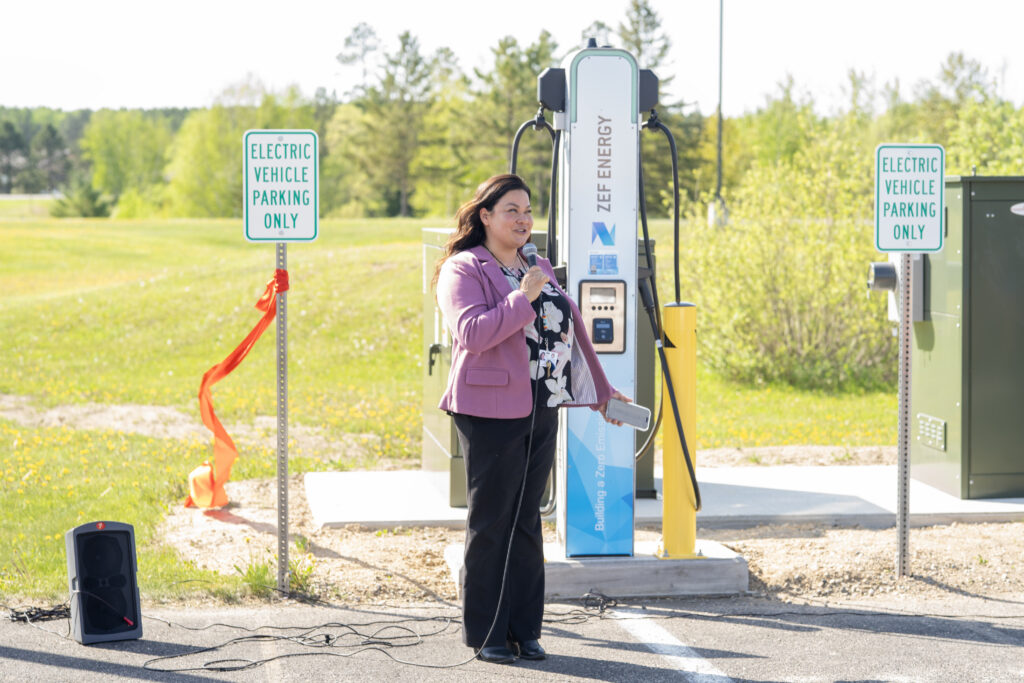
Seven Clans Casino GM Angela Dauphinais speaking at the Native Sun and Seven Clans Casino ribbon-cutting for the Red Lake Nation’s first public DC fast charger. Photo by Nedahness Rose Greene.
Tati: That’s awesome. You spoke to that last part regarding my third question: the Native Sun and Seven Clans Casino ribbon cutting was one of the biggest parts of the event, being the first public DC fast charger at Red Lake. What does the charger mean for the community from what you saw, and what was that moment like?
Jessica: I think that the charger really signifies new opportunities. Native Sun has built a foundation of education towards learning more about the connection between renewable energy and transportation, the importance of it for Tribal sovereignty, and the opportunities it brings to our communities to be more self-reliant and self-sufficient. It allows people to explore how technology can improve our day-to-day lives.
That’s what all of this is building toward: the education of it all, showing how important renewable energy really is in powering EVs on Tribal lands, and showing that learning about these things, especially within Tribal communities, is the future.
(Find out more about the Native Sun and Seven Clans Casino fast charger opening ceremony at https://www.nativesun.org/post/freedomtodrive-news)
Kat: I would also add that, in addition to opportunity, it provides visibility for EVs, as we talked about before.
It is also an opportunity for the local leadership in the Red Lake Nation, because I know it’s important to them to help the community with accessibility. The Red Lake Nation has a bunch of vehicles that they use for the community—vans or buses—so it furthers their ability to create a broader sense of community and help everyone.
It also provides visibility for something that people may be nervous about. Everyone talks about range anxiety, but we know range anxiety is reduced in communities where they have more EV visibility, more EV drivers, and more charging stations. This helps with the barriers that come with EVs being new to a community. All around, I think we were just happy to be a part of something that can hopefully be helpful for the community.
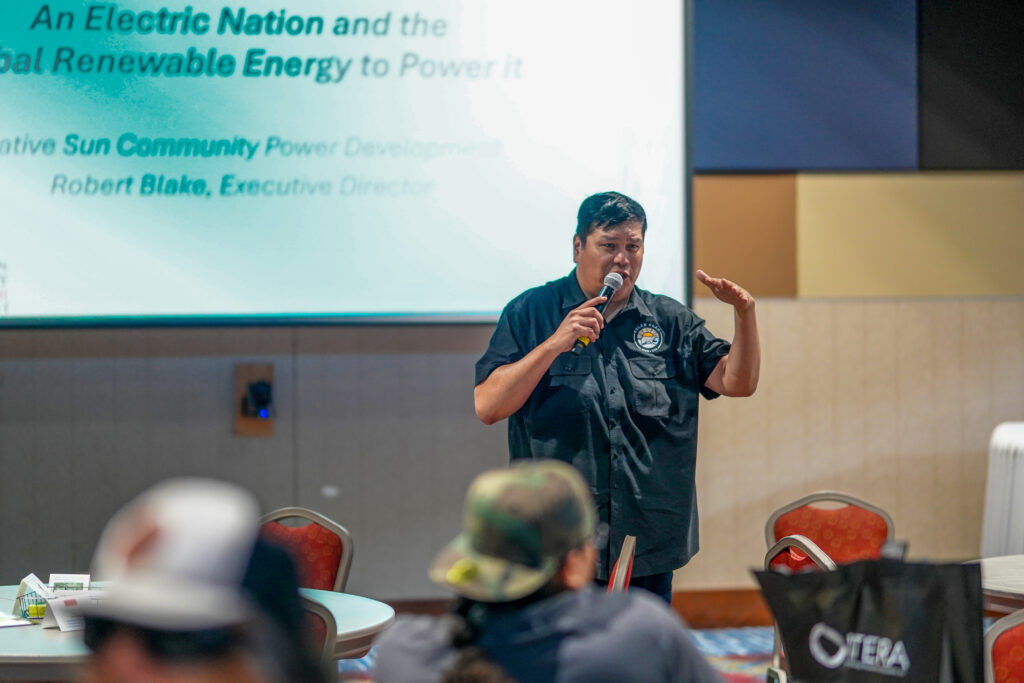
Native Sun’s executive director Bob Blake speaks about electrification. Photo by Nedahness Rose Greene.
Tati: What was the biggest takeaway from working on this event?
Jessica: My biggest takeaway is that we need to have more events like this. We need to create more opportunities to have these conversations and meet people where they’re at.
People are very curious about the technology. It’s really important to be able to have conversations with people in an environment that is very low-pressure and interactive.
We had a plug-in hybrid vehicle there that had its whole setup displayed, and people were able to interact with that and ask questions like, “What does it look like to plug a vehicle in?” or “What does the range look like?”
I’d like to continue creating those opportunities to have those conversations, especially in the current climate where we’re seeing low EV inventory on dealer lots. We need to still have spaces where people can come ask questions and talk to people who are experiencing EVs firsthand so they can have genuine, authentic conversations.
Kat: I would just echo what Jessica said. We want to make sure that we are able to get out there and talk to lots of different communities about EVs. For this particular event with the Red Lake Nation, it was wonderful because we had really open lines of communication with all of our partners. We really took extra time to listen to what the needs of the community were.
For example, we didn’t implement our standard event surveys like we normally do; we had a member of the community help us implement the survey. We hired a local photographer from the community. We hired a local videographer from the community. All of the food that we bought for the event was from the community.
These are things that we heard from the community that were important to them, so we made the extra effort to listen, be responsive, and implement in a way that was comfortable for everyone. It’s about taking these best practices for community-led events and bringing them into more communities across the U.S.
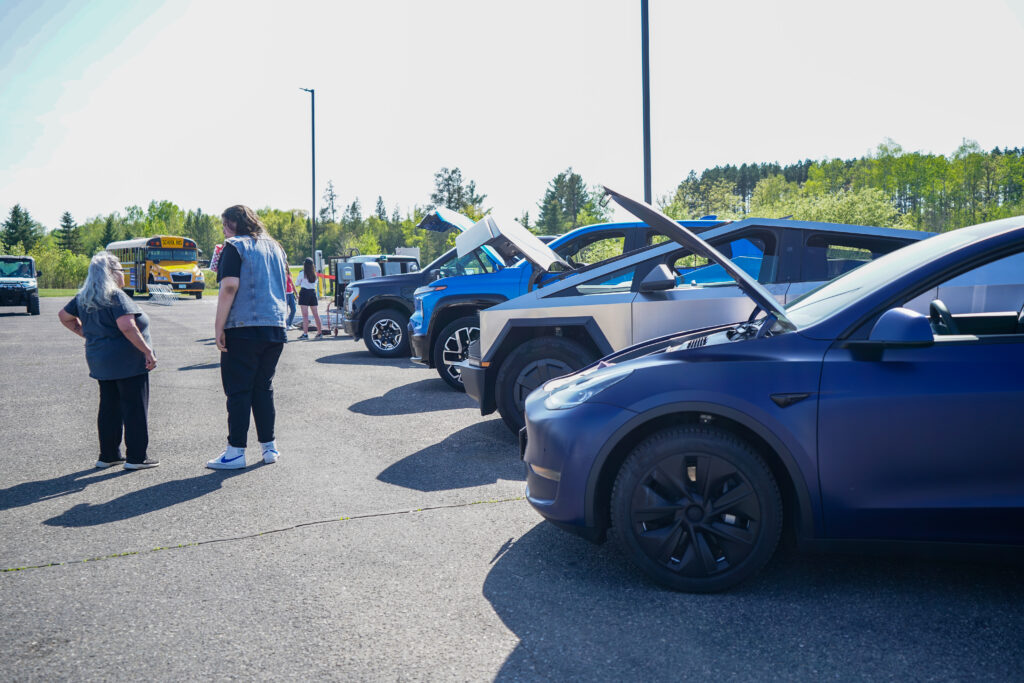
Photo by Nedahness Rose Greene.