
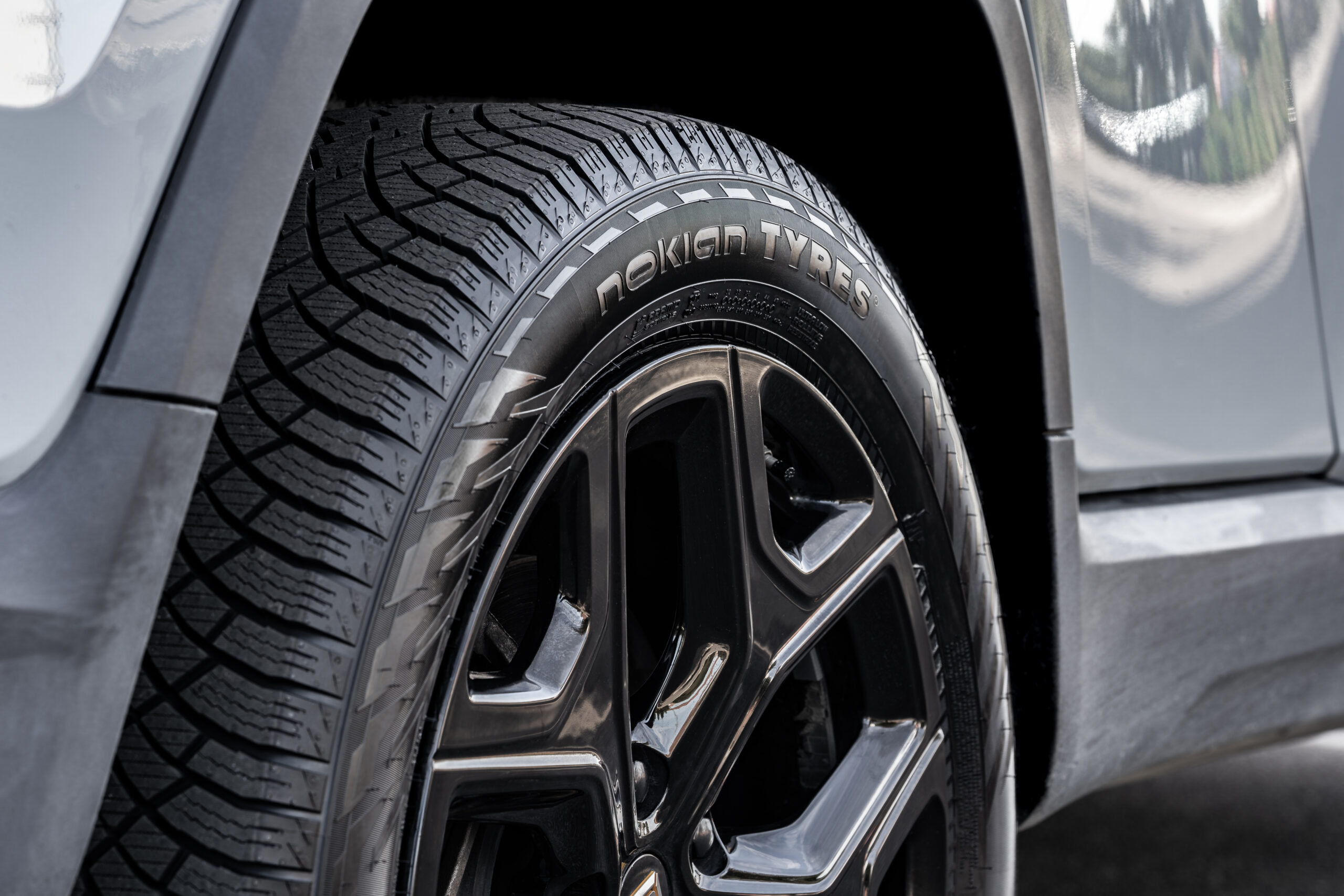
This article is sponsored by Nokian Tyres.
As electric vehicles continue to redefine the automotive landscape, many drivers notice something unexpected the first time they get behind the wheel: just how quiet EVs are.
At highway speeds, electric vehicles tend to be around three decibels quieter than gas-powered automobiles, and this difference can increase to as much as 10 decibels during low-speed city driving – which feels about half as loud to the average driver. It’s the same perceived difference as the intrusive bluster of a blender versus the subtle flow of a dishwasher.
The difference is caused by the series of controlled explosions inside the fuel cylinders of internal-combustion-engine vehicles. In addition, their exhaust systems naturally amplify sound; on the contrary, of course, EVs create no exhaust and are powered by a silent battery.
Without the constant hum of an internal combustion engine, new sounds emerge. The most prominent noise? The hum of tires as they roll along the surface of the road. For tire manufacturers, that’s a challenge. As EV adoption accelerates, tire design has entered a new era where silence matters more than ever.
Why Tires Matter So Much to EV Drivers
In internal combustion vehicles, engine and drivetrain noise often mask sounds created where the tire meets the road. Electric vehicles remove that layer almost entirely. What remains is road noise: vibrations, air movement and resonance transmitted through the tire, suspension, and vehicle structure into the cabin.
That’s a problem, since EV drivers expect a quiet ride. Tiremakers are coming to the rescue with solutions designed to reduce noise levels without compromising safety, efficiency or performance.
An Analog Solution for High-Tech Vehicles
Ironically, tire manufacturers are employing simple solutions to make innovative EVs more comfortable on the road. One such answer: acoustic foam placed between the tire and the rim.
By integrating an acoustically optimized foam layer inside the tire, the foam reduces resonance and dampens vibrations before they reach the cabin. The result is a noticeably quieter ride, particularly at higher speeds and on coarse road surfaces where noise typically increases.
Dedicated EV Tires or One Size Fits All?
As tiremakers address EVs unique demands – noise, but also weight, torque and range – they’re taking two different proverbial roads. Some manufacturers are creating entire product lines designed specifically for electric vehicles. In addition to possessing unique properties intended to solve the challenges EV drivers face, exclusive product segments help tiremakers brand themselves as leaders in this emerging space.
Other manufacturers believe in EV-optimizing every tire they make. For instance, the latest generations of Nokian Tyres products carry an Electric Fit emblem that signifies that all their tires are developed with electric vehicles in mind. This widens the range of tires available to EV drivers and assures them of a comfortable, quiet ride regardless of their priorities on the road. Companies that take the “one size fits all” approach have typically baked EVs into their testing processes for more than a decade and are comfortable infusing their tires with properties that minimize sound without sacrificing safety.
A Quieter Road Ahead
As electric vehicles reshape expectations around mobility, tires will play an increasingly central role in how drivers experience the road. From reducing cabin noise to improving efficiency and safety, thoughtful tire design can elevate every journey.